


مرحلة الاختصاص ( الصفوف الأولية ) : نظرة عامة
يقول معظم علماء النفس التربوي إنّ المدرسة تقتل الذكاء لدى الأطفال لأنّها تمنع الأطفال من حريتهم وانطلاقهم نتيجة فرض الانضباط والتعليم بالحصص المحددة الزمن والإجراءات التي تحقق سيطرة الإدارة على سير الأمور بدواعي الانتظام.
لذلك ، ومن منطلق الوعي بهذه الحقيقة ، فقد صمّمنا المنهج التدريسي في هذه المرحلة المبكّرة من التعليم الابتدائي لنقرن التعلم باللعب والعمل ، و بدمج مهارات المادة معاً بحيث يأتي التعلم تلقائياً وكأنّه رحلة اكتشاف يومي .
ففي هذه المرحلة يقترن التعلم بالمحسوسات في اللغة والرياضيات ثم تبدأ رحلة التجريد بالتدريج.صُمّمت الغرفة الصفية لتضم أركان :
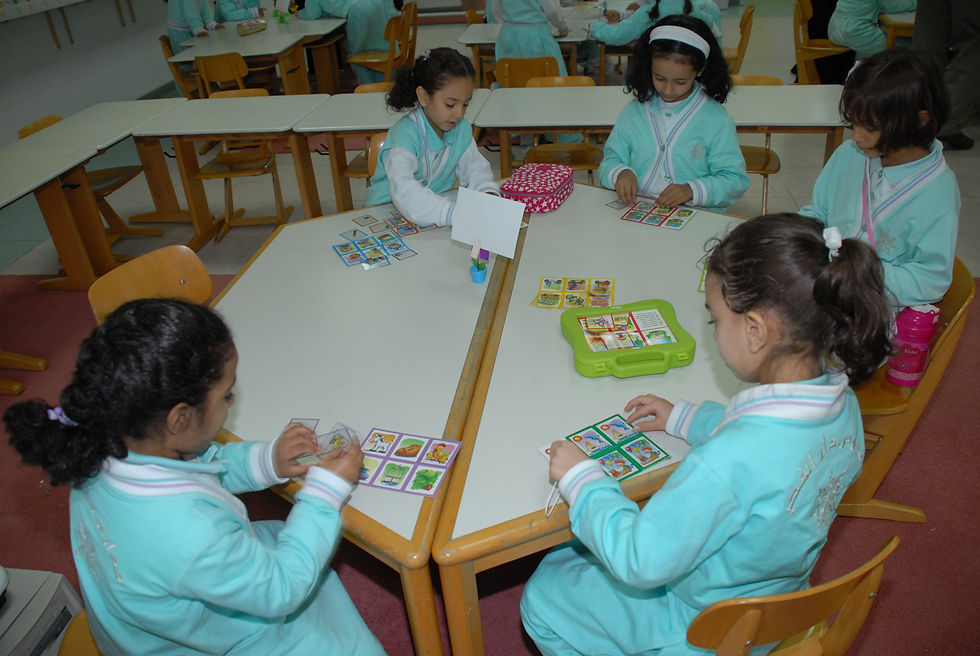
الركن الإدراكي ، ركن الاكتشاف ، ركن المكعبات ، ركن التخيُّل . ومن خلال اللعب الموجّه يتجوّل الطلاب ويرتقون في المحطات ، فيتعلمون القراءة والقصة والرياضيات بطريقة تكاملية وتفاعلية . يتم تقسيم الأطفال داخل القاعة إلى مجموعتين مع معلمتين متخصصتين بحيث يتراوح عدد الأطفال في كل مجموعة من ( 9 – 13 ) طفلاً .
KG3:
English :
Children at this stage would be able to :
Reading:
• Phonics: Know and identify letters and their sounds and begin to blend sounds to make words or syllables.
• Recognize one syllable, High Frequency Words and irregular sight words.
• Listen to and discuss text read aloud.
• Listen to, follow and give directions.
Writing
• Write uppercase and lowercase letters, and simple (CVC) words legibly with good spacing
• Identify the naming and telling parts of a sentence
• They should be beginning to spell common, phonetically regular words (CVC only) independently.
• Recognize and be able to write their name.
Speaking & Listening
• Begin oral telling a narrative and descriptive story.
• Listen and recite a variety of stories, poems, songs, personal accounts; listen for enjoyment and participate in class discussions.
• We emphasize the importance of speaking clearly and audibly and children are encouraged to follow rules of conversation.
Math.
To strengthen childrens' learning strategies by providing a friendly and pleasant environment.
The curriculum for this academic year, that we have carefully selected, will reinforce the learning abilities of an elementary-aged student.
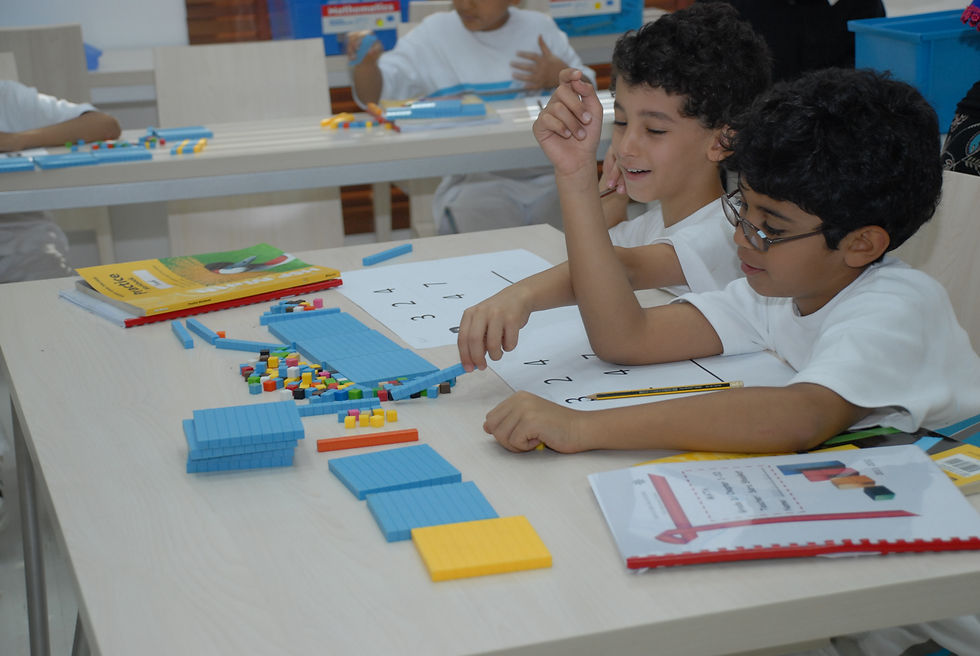
By the end of Kindergarten, students will acquire the basic skills in numbers and numeration, operations and computation, data and chance, measurement and reference frames, geometry, patterns, functions, and simple algebra. Manipulatives are used regularly to demonstrate concepts and to allow the students to learn the foundations of Mathematics using hands-on activities.
Connections to real life are made with each focus unit. Students with particularly strong Math skills may also be challenged through small group work.
Science
The science curriculum for KG 3 aims to provide a good introduction and foundation in science for our youngest students. We encourage them to observe the world around them and try to make sense of it. We encourage our students to take a hand-on, practical approach to their work, providing interesting and engaging tasks that allow the students to discover. We provide opportunities for our students to develop and use many of the skills that people use every day, like solving problems creatively, thinking critically, working cooperatively in teams.
Our program includes topics in Life Science, Earth Science and Physical Science.
We endeavor to teach and develop our students inquiry skills of observation, comparing, classifying, predicting, measuring, recording as well as asking questions.
Wherever possible, we use the 5 'E's' to Science inquiry engage, explore, explain, extend and evaluate. In addition, since the KG 3 class is taught in a homeroom, extra reinforcement is given in Arabic so that the children receive instruction in English and Arabic to ensure they develop a better vocabulary and understanding of concepts.